
Every Golden Quarter gets a headline number. This year’s is £17.9bn: what UK consumers plan to spend on gifts and personal purchases between Black Friday and the January sales, roughly £334 each.
The mood behind the number matters more. PwC’s consumer sentiment index climbed to +1 in August, up from –13 in April, its first positive reading since the pandemic. A quarter of shoppers now expect to spend more on Christmas than last year, against 21% who expect to spend less, and 14% had already started their Christmas shopping by mid-August. PwC’s own caveat: that confidence may have arrived too early, with food and fuel inflation expected to bite this autumn.
So the shopper arriving this season is confident on paper and careful in practice. None of the five behaviours below began with Christmas. But peak season is where their commercial consequences become hardest to ignore, and all five point the same way. Shoppers aren’t short of choice. They’re short of certainty.
What consumer trends will shape the 2026 Golden Quarter?
Five shifts stand out for beauty and fashion: selective spending that protects the treat; K-beauty’s rapid growth in Europe; rising distrust of synthetic content; creator-led commerce that collapses advice and checkout into one screen; and stores that work as consultation rooms rather than tills. Each one rewards brands that make a considered purchase feel certain.
1. The spreadsheet splurge
PwC summed up last Christmas in six words: “Shoppers brought spreadsheets, not impulse, to Christmas.” The spreadsheets are still open. Epsilon’s Golden Quarter research finds 71% of UK consumers plan to cut back on non-essentials, 68% are hunting lower prices and 63% are postponing bigger purchases.
But there’s one line nobody is deleting: the treat. Almost half (48%) still plan the occasional indulgence, and more than a third will choose quality over quantity. Earlier this year, PwC found younger consumers were the least willing to cut fashion, health and beauty ahead of other outgoings.
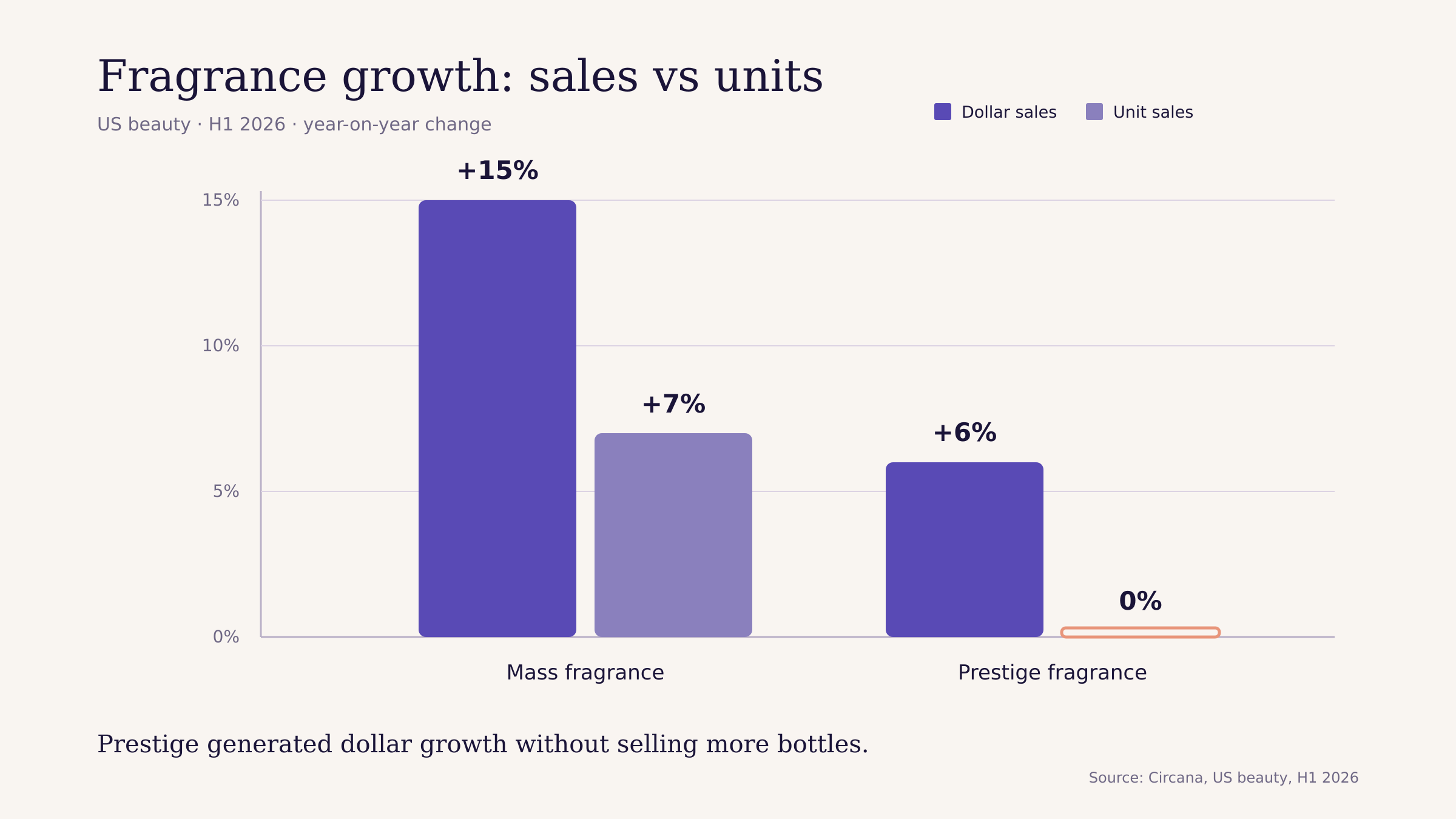
Beauty shows the pattern most clearly. US prestige beauty grew 7% to $17.1bn in the first half of 2026. Fragrance is the new lipstick: mass fragrance sales rose 15% with units up 7%, while prestige fragrance grew through premiumisation, with average prices up 5% on flat units as shoppers traded up to eau de parfum and parfum.
Often, the treat is for the buyer. At last year’s Black Friday, more than two-thirds of UK shoppers planned to buy something for themselves, with electricals, tech and fashion leading. Across Europe, BCG found “gifts for others” slipping to 64% as a purchase motivation. The self-gift is fashion’s quiet Golden Quarter engine: the coat watched since October, the boots that finally drop into budget.
The move: Don’t discount the hero; justify it. A considered shopper needs a reason the purchase is right: the right shade, the right scent family, the right fit. Certainty is what turns a watched item into a basket.
2. K-beauty crosses the Channel
This is the fastest-moving story in European beauty, and most Western brands are still treating it as a trend. Korea’s cosmetics exports passed $7bn in the first half of 2026, up 27.3%, the biggest first half on record. Europe is where it’s accelerating: exports to the UK rose 150.6%, to the Netherlands 220.4% and to Poland 72.8%. Korea Customs data shows first-half exports to Europe reached nearly $1.6bn, overtaking North America.
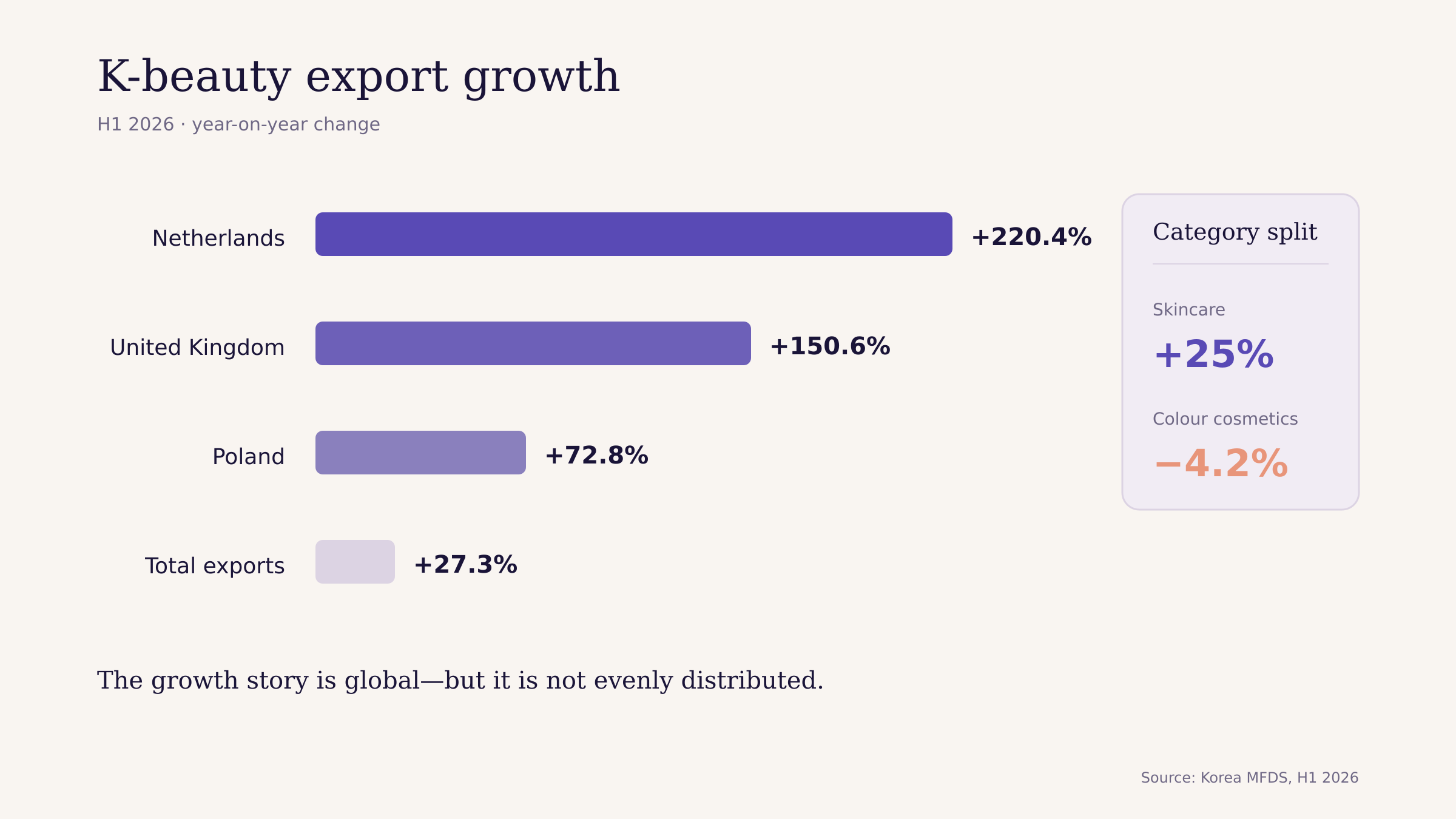
What’s growing is the part that matters most. Basic skincare made up $5.48bn of the half-year total, while colour cosmetics slipped 4.2%. That’s growth in daily routines, beauty’s most loyal and most repeatable category, not novelty. NIQ estimates Korean brands now account for around 10% of European online skincare sales, and 15–20% in leading markets.
Retailers have noticed. John Lewis opened a dedicated K-beauty shop-in-shop after searches for Korean skincare on its site rose roughly 800% in a year, adding 20 brands alongside ingredient curation and expert consultation.
The move: The lesson isn’t “stock K-beauty”. It’s that the Korean playbook is concern-led: shoppers look for dehydration, redness or texture, and pick a brand after that. European brands that explain routines by skin concern, rather than by product line, will hold their shelf this Christmas. Discovery that starts from need rather than taxonomy is the same principle.
3. Proof beats polish
This trend is about what earns trust. And it’s one an AI company arguably shouldn’t be the one to point out, but should: shoppers are turning against content that feels synthetic. In research released at Cannes Lions this June by The Harris Poll with the 4As and Infillion, 78% of consumers said AI makes ads feel less authentic, 73% would trust an ad less if they suspected AI made it, and 63% would be less likely to buy from the brand behind it.
Fashion feels the absence of proof most directly, in its returns. In a survey of 1,002 UK shoppers, around 30% of fashion bought online is returned each year, with poor fit the main reason, and 62% admit to bracketing: ordering several sizes or colours to send most of them back, a habit that rises around holidays and special occasions. A polished product shot shows how a dress looks on a model. It can’t show how it looks on someone like you. A customer photo, a fit note or a “runs small, size up” review can.
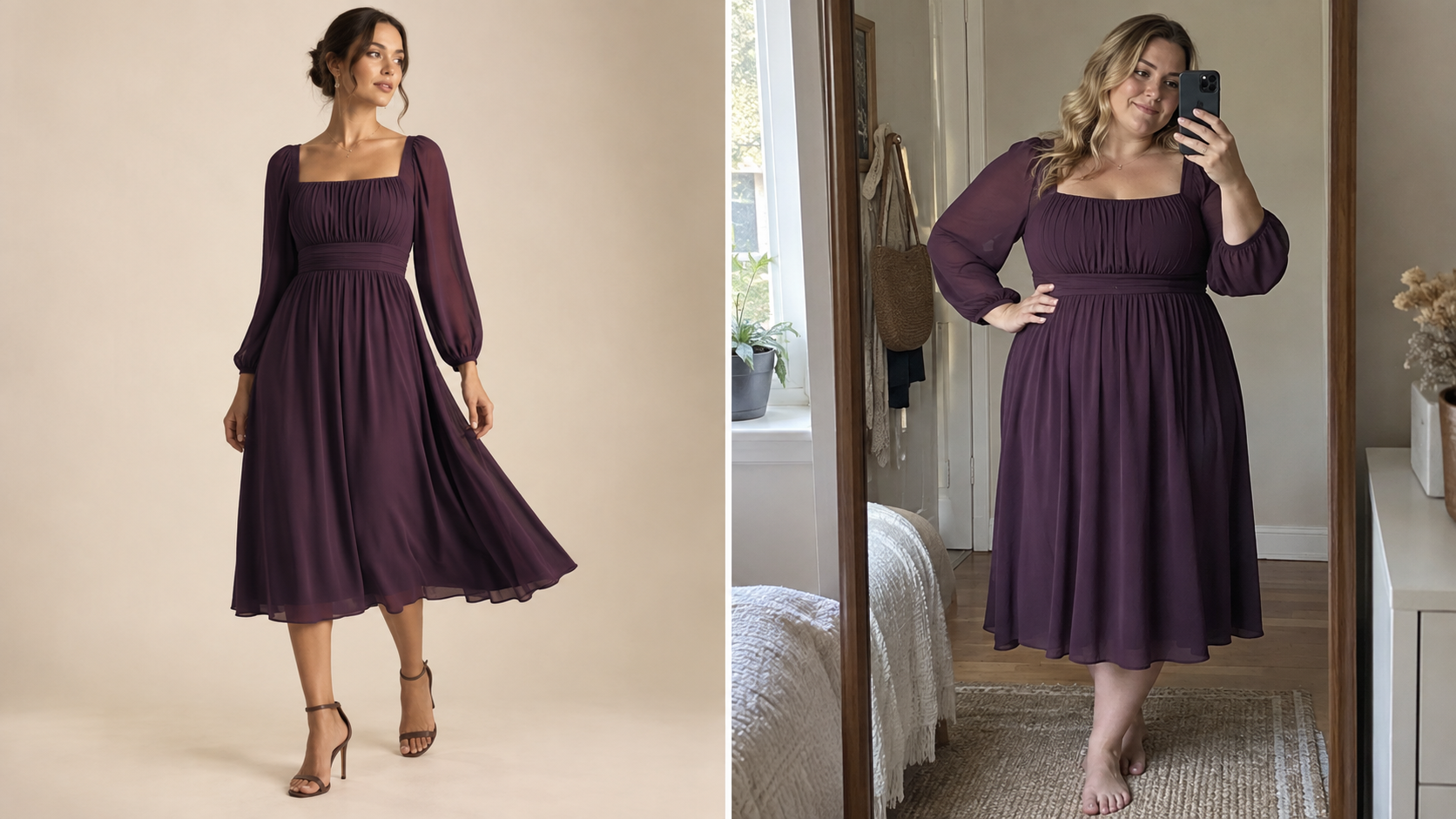
As AI makes polish cheap, polish stops being worth much. Proof is what’s scarce now: a real face, a real routine, a real fit.
The move: Use AI behind the scenes, to match, personalise and route. Put real customers at the front. For beauty, that means before-and-afters and routines. For fashion, it means customer fit photos across sizes on every hero product before Black Friday.
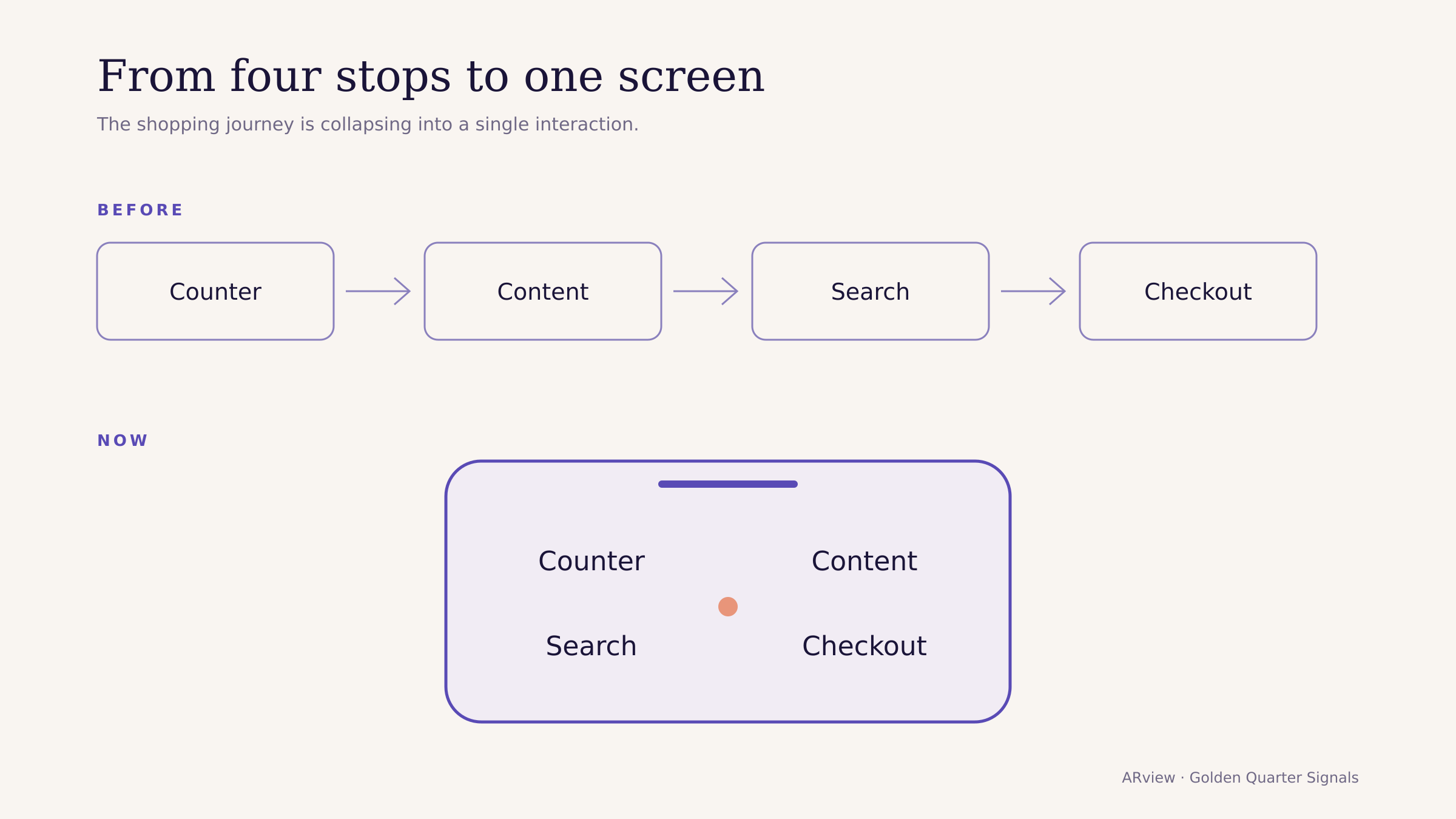
4. The counter, the content and the checkout are now one screen
If trend 3 is about what earns trust, this one is about where the decision now happens, and how short the distance has become between asking a question and paying.
By TikTok’s own count, TikTok Shop became the UK’s fourth-largest beauty retailer in 2025, growing 60% year on year, driven by creator education and shoppers searching by skin concern. Beauty now makes up 46% of all FMCG value sales on the platform. The format collapses three steps into one. The Ordinary uses LIVE sessions to answer routine questions in real time, then builds bundles on the spot for the concerns viewers raise: consultation, content and checkout within the same few minutes.
It’s growing the market, not just moving it around: around 30% of TikTok Shop beauty buyers hadn’t bought beauty online at all in the previous year.
The move: Map where your customers ask questions, and count the steps between the answer and the basket. Every link out, new login or fresh product search is a place where a considered shopper stops. We went deeper on this in The Rise of TikTok Shop.
5. The store becomes the consultation room
The comeback everyone expected to be about online is partly about stores. In Attest’s 2026 research, 91% of Gen Z include in-store shopping in their beauty journey, and 61% of 18–26-year-olds say they now prefer shopping in a physical store, half of them because they feel they spend more wisely there. Yet transactions keep moving online: nearly half of UK premium beauty sales happened online in 2024, up from 28% in 2019, and in the US, online has overtaken bricks-and-mortar as the leading channel for prestige skincare.
Both are true, and they fit together. The store’s job is changing from till to consultation. Shoppers want what a screen can’t fully give them: touch, testing, a human read on their skin or their silhouette. And they expect that advice to be about them: 82% of UK adults actively seek personalised beauty solutions. That is personalisation built on individual fit, not segment averages.
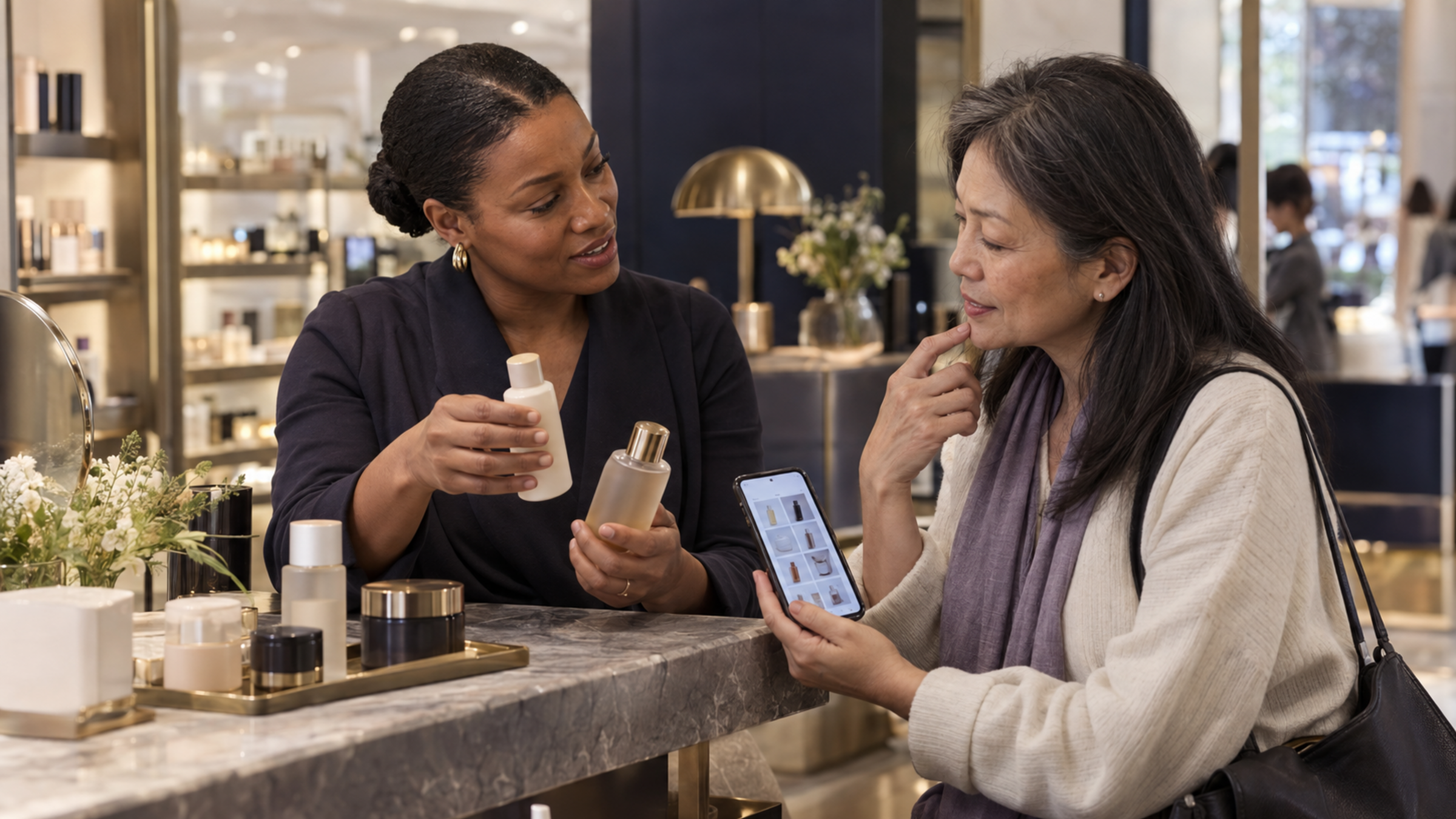
Fashion has run a version of this for years. John Lewis has more than 180 personal stylists across 31 shops, and after each appointment sends customers an online wishlist of anything they want to think over. That last detail is the whole point: the consultation follows the customer home.
The move: Measure stores on what they create, not only what they ring up: diagnostics completed, looks built, and profiles that carry through to the app and the next online order. A consultation that doesn’t follow the customer home is a nice chat, not a sale.
The thread
Put the five together and you get one shopper: careful with money, generous with the right treat, suspicious of anything that feels manufactured, and happy to be advised by a real person, whether on a live stream, in a fitting room or at a counter.
The Golden Quarter will not be won by generating more choice, more content or more promotions. It will be won by reducing uncertainty: helping each shopper understand what fits, what works, what is worth paying for and whom they can trust.
Next in the series: Golden Quarter Trends, Vol. 2, a post-Black Friday read of what actually happened.
Sources
- Epsilon: Advertising Under Pressure, your guide into Golden Quarter 2026 and beyond
- PwC UK: Consumer Sentiment Survey press release, 14 September 2026
- PwC UK: Retail Outlook 2026
- PwC UK: Consumer Sentiment Survey, Spring 2026
- PwC UK: Black Friday 2025 consumer research
- BCG: Black Friday Consumer Study
- Circana: US beauty industry, H1 2026
- WWD: How beauty performed in the first half of 2026
- Korea Ministry of Food and Drug Safety H1 2026 exports (via Seoul Economic Daily)
- Korea Customs Service exports to Europe and John Lewis K-beauty (via Seoul Economic Daily)
- NIQ: K-Beauty Goes Global (2026)
- The Harris Poll with 4As and Infillion: I Never Asked for This (Cannes Lions 2026)
- fulfilmentcrowd UK fashion returns survey, n=1,002 (via Just Style)
- TikTok Newsroom: TikTok Shop Beauty Crush
- NIQ: Why Ignoring TikTok Shop Is a Strategic Risk (2026)
- Attest: Gen Z beauty trends 2026
- Attest: Retail trends 2026
- Barclays: Beauty Trends 2026
- John Lewis: Personal Styling