
Almost every brand says it personalizes. Very few agree on what the word means.
"Personalization" can describe a homepage that greets someone by name, a recommendation based on their last purchase, or a system that matches products to their skin, measurements or preferences. These experiences are not equivalent. They use different evidence, answer different questions and create very different kinds of value.
The useful distinction is not simply between personalization and hyper-personalization. It is between predicting relevance by proxy and understanding individual fit.
The short version
- Hyper-personalization combines multiple signals about an individual and adapts the experience in real time.
- Segment data provides context. Behavioral data reveals intent. Diagnostic and fit data adds direct evidence of suitability.
- Diagnostic signals do not replace behavior or context. They make the overall system more precise.
- Most recommendations answer, "What might someone like you want?" The harder and more valuable question is, "What is likely to suit you?"
- McKinsey found that 71% of consumers expect personalized interactions and 76% become frustrated when they do not receive them. The expectation is individual. Much of what shoppers encounter is still based on approximation.
What is hyper-personalization?
Hyper-personalization is the practice of adapting an experience to a specific individual, in the moment, using a combination of their context, behavior, preferences and other consented first-party signals.
The prefix does not mean that one particular type of data suddenly replaces every other form of personalization. It means the system can understand and respond to the person with greater specificity: what they are doing now, what they have previously shown or stated, what is relevant in their circumstances and, where appropriate, what is known about their individual fit.
A recommendation based only on age or location is personalized at a segment level. A recommendation that responds to someone's current search, purchase history, stated preferences and diagnostic profile is operating at a much more individual level.
Hyper-personalization is therefore not one signal. It is the orchestration of several signals around one person.
What are the three signal layers behind personalization?
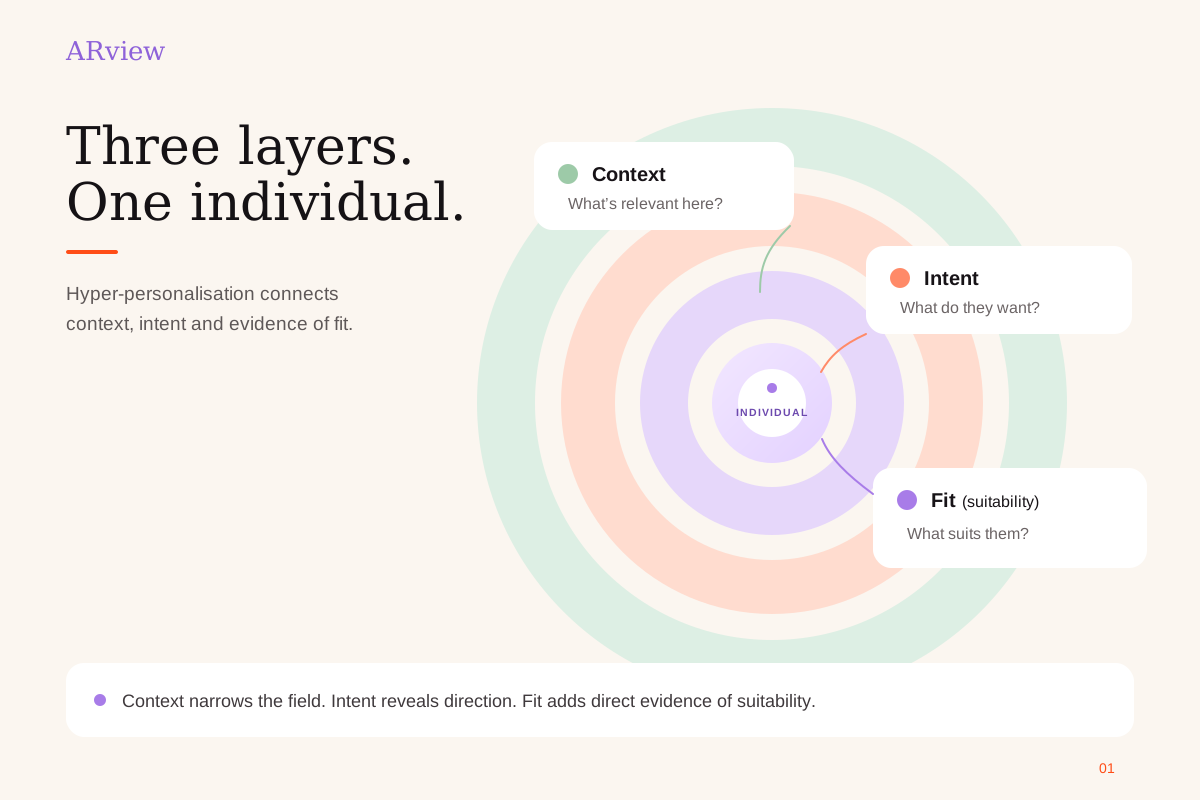
It is useful to think about personalization as three layers of evidence. They are not competing approaches or successive stages that make the earlier ones obsolete. The strongest systems combine all three.
1. Context: who and where the shopper is
Contextual personalization uses information such as location, age range, language, loyalty tier, device or local weather. It can quickly make an experience more relevant and is often possible before a shopper has generated much individual history.
Its limitation is granularity. Knowing that someone is a loyalty member in London may help determine the appropriate delivery message or offer, but it says very little about which foundation shade, skincare routine or trouser cut will suit them.
Context narrows the field. It does not establish fit.
2. Intent: what the shopper does and says
Behavioral personalization uses searches, clicks, product views, purchases and other interactions to infer intent. Declared signals — such as a stated budget, preferred style or disliked ingredient — make that picture more explicit.
This layer powers many familiar recommendation experiences. Some systems use collaborative filtering to identify patterns among shoppers with similar behavior. Others combine an individual's activity with product attributes, real-time context and predictive models.
Behavior is valuable because it belongs to the individual, but it remains an imperfect representation of need. A product view can signal interest, confusion, comparison shopping or a purchase for somebody else. Historical behavior can also anchor recommendations to what was bought before rather than what is needed now.
Behavioral models face familiar technical constraints too. New shoppers and new products create a cold-start problem because little or no history exists. Popularity bias can repeatedly direct attention toward products that already perform well. In both cases, the system risks reinforcing existing patterns rather than discovering the best match.
Intent tells a brand what someone appears to want. It does not always explain what will suit them.
3. Fit: what is specifically relevant to the individual
Fit signals describe the attributes that directly affect product suitability. Some are measured or observed: visible skin indicators, body measurements, garment fit or face shape. Others are inherently subjective and therefore need to be declared: scent preferences, desired finish, comfort requirements or the mood someone wants a product to create.
Diagnostic personalization is the measured part of this layer. It uses consented, first-party analysis of an individual attribute to improve the match between person and product.
In skincare, for example, camera-based analysis can assess visible indicators associated with concerns such as texture, uneven tone or dryness. Recommendations can then respond to those indicators alongside the shopper's goals, preferences and purchase behavior. In fashion, measurements and fit feedback can supplement browsing history and a generic size chart. In eyewear, face shape and dimensions can improve frame guidance.
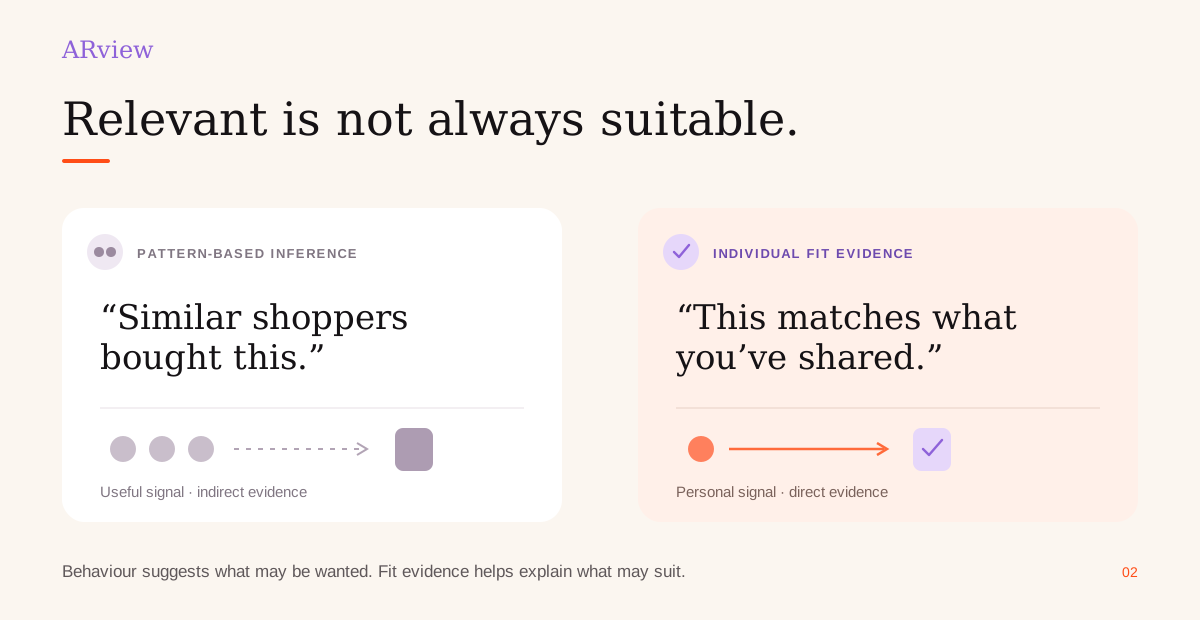
The important difference is evidential. "People with similar behavior bought this" is an inference from patterns. "This product matches the attributes and preferences you have shared" is evidence of individual fit.
Why does "recommended for you" still feel generic?
Because relevance and suitability are not the same thing.
A behavioral system can make a very relevant recommendation. If someone browses several berry lip colors, showing another berry shade is perfectly rational. But the behavior alone cannot establish which shade works with their coloring, which finish they prefer or whether they were shopping for themselves.
The problem is not that behavioral personalization is false. It is that brands often ask it to answer questions the available data cannot support.
This helps explain the distance between consumer expectations and many current experiences. McKinsey reports that personalization commonly produces a 10–15% revenue lift, while faster-growing companies derive around 40% more revenue from personalization than slower-growing peers. Those figures demonstrate the commercial value of personalization broadly. They also make the quality of the underlying signals increasingly important.
As personalization becomes the default expectation, "similar shoppers also bought" is no longer the endpoint. It is one input into a more complete understanding of the individual.
Does diagnostic personalization only apply to skincare?
No. It applies wherever product suitability depends on attributes that cannot be reliably inferred from demographics or clickstream alone.
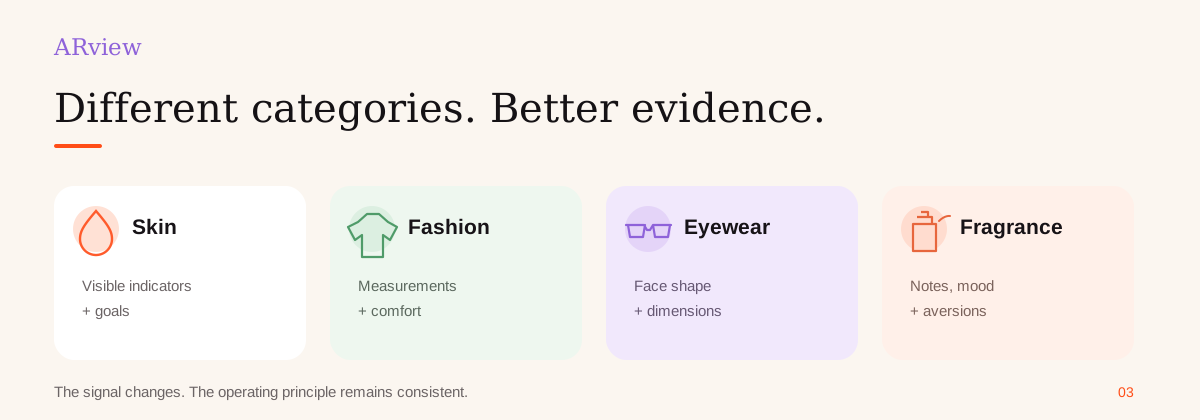
In beauty, that can include visible skin indicators, coloring, face shape and desired finish. In fashion, it includes measurements, proportion, fit and comfort. In eyewear, jewelry and accessories, facial structure, dimensions and styling preferences matter. In fragrance, suitability is less physically measurable, so this fit signal is typically declared rather than diagnostic: structured discovery can translate memories, moods, notes and aversions into usable preference signals.
The category changes, and so does the balance between measured and declared information. The operating principle remains consistent: collect better evidence from the individual, combine it with their context and intent, and use it to improve the match.
For a multi-category retailer, this creates a foundation that can travel across departments. The system does not need to pretend that skin, fashion fit and fragrance taste are the same kind of data. It needs a common way to capture category-specific signals, connect them to one customer profile and activate them in the appropriate experience.
Does better personalization require more personal data?
Often it requires more specific data, which makes consent and value exchange central to the design.
Research on the personalization paradox finds that consumers want more relevant experiences while remaining wary of how their information is collected and used. NRF's summary of 2025 consumer research identifies distrust as the root of that tension and transparent value exchange as the route through it.
The standard should not be to collect every available signal. It should be to collect the minimum information required to create a clearly better outcome.
Diagnostic and fit data can make that exchange more visible than passive behavioral tracking. A shopper chooses to complete an analysis, provide measurements or describe a preference, and receives more useful guidance in return. But the benefit does not remove the obligation. Brands still need explicit consent, understandable explanations, appropriate retention, security and meaningful control over future use.
The most defensible first-party data is not simply data a brand is legally able to retain. It is data the shopper knowingly provided because the benefit was clear — and would be comfortable using again.
How can brands move from recommendations to individual fit?
The goal is not to replace an existing recommendation engine with a diagnostic tool. It is to connect context, intent and fit across the journey.
That requires four practical steps:
Capture a meaningful fit signal. Start with a use case where better information can materially improve the decision: a skin analysis, fit profile, structured discovery experience or another category-specific input.
Store it as reusable, structured data. A signal trapped inside a one-off quiz or widget cannot improve the rest of the customer experience.
Combine it with context and intent. A diagnostic result becomes more useful when interpreted alongside goals, preferences, behavior, price sensitivity and current shopping context.
Activate it across relevant touchpoints. Product recommendations may be the first application, but the same consented signal can inform CRM, replenishment, merchandising, retail media and future guided experiences.
This is the architecture ARview is built around. The Experience Studio captures high-intent signals through skin diagnostics, guided discovery and immersive try-on experiences. The Agentic Commerce Hub is designed to connect those signals to personalization, retail media, merchandising and the wider commercial system rather than leaving them stranded inside a single session. The same operating logic can extend across beauty, fashion and lifestyle as additional category experiences become available.
The experience is what the shopper sees. The connected intelligence behind it is what allows personalization to improve over time.
The three signal layers at a glance
- Context — location, language, demographic information, loyalty tier, device. Answers: what's relevant in this shopper's circumstances? Limitation: broad context cannot establish individual preference or fit.
- Intent — searches, clicks, views, purchases and declared goals. Answers: what does this shopper appear to want now? Limitation: behavior can be ambiguous and history may not reflect current need.
- Fit — diagnostic indicators, measurements, fit feedback and structured preferences. Answers: what is more likely to suit this individual? Limitation: requires category-specific capture, consent and careful interpretation.
Hyper-personalization happens when these layers are connected and activated for one individual in real time. Diagnostic personalization contributes the evidence of fit that many recommendation systems are currently missing.
FAQ
What is hyper-personalization? Hyper-personalization is the practice of adapting an experience to a specific individual in real time using a combination of their context, behavior, preferences and other consented first-party signals. It is not defined by one type of data, but by how precisely those signals are connected and activated around the individual.
What is diagnostic personalization? Diagnostic personalization uses consented analysis of an individual attribute — such as visible skin indicators, measurements or face shape — to improve the match between a person and a product. It supplements behavioral and contextual data with more direct evidence of fit.
Is diagnostic personalization the same as hyper-personalization? No. Diagnostic personalization is one input into hyper-personalization. Hyper-personalization combines diagnostic or fit information with behavioral, contextual and declared signals, then uses that combined understanding to adapt the experience for the individual.