
If you've worked with me at any point, you'll know I'm an omnichannel advocate. I'll make the case for it on any given day, and I have, in more leadership meetings than I can count.
Not because it was fashionable, but because the premise was obviously right. A customer doesn't experience your ecommerce team, your retail team, your CRM team and your customer service operation as separate businesses. She experiences one brand.
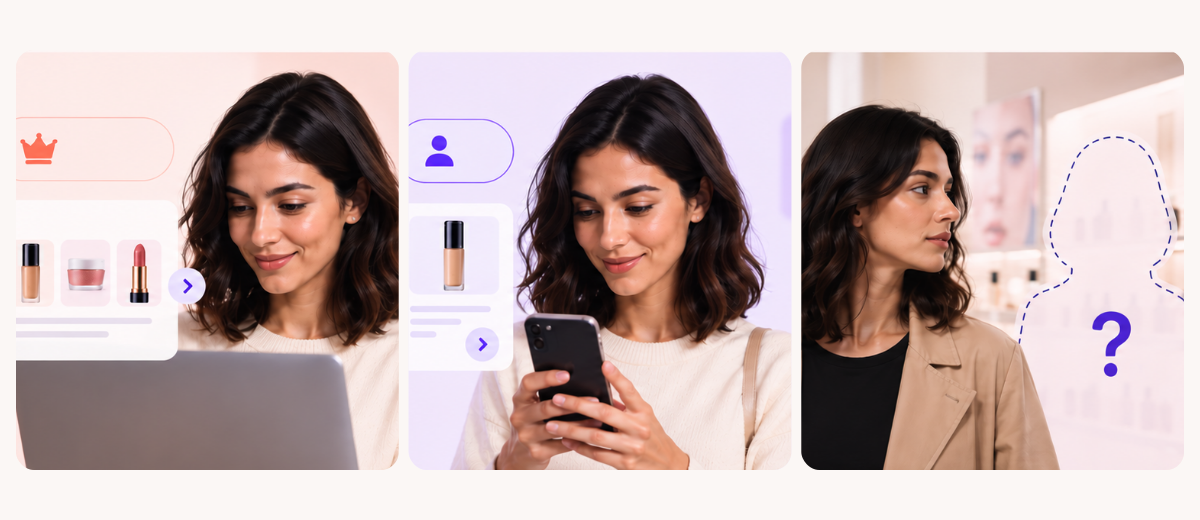
We all know the experience as consumers. On the website you're a loyal customer with a tier, a history and saved preferences. Open the app and you're someone else, with a separate account, separate points and a separate identity. Walk into the store and you don't exist at all.
I've had this with travel platforms, fashion brands and members-only shopping apps: different accounts, different loyalty status, the same person. None of them are small or unsophisticated businesses.
What strikes me every time is that nobody has done anything wrong. The app team built a good app. The web team built a good site. The store team runs good stores. The failure sits in the space between them.
That's the part of omnichannel we rarely say out loud.
It was never mainly an interface problem. It was a coordination problem.
Two integrations at once
Over the past decade and more, large retailers have built a lot of omnichannel: click-and-collect, unified loyalty, endless aisle, cross-channel returns, inventory visibility, apps, CDPs. The investment was real, and so was the progress.
Yet the seamless experience we imagined stayed out of reach for most large brands, because omnichannel asked for two integrations at the same time.
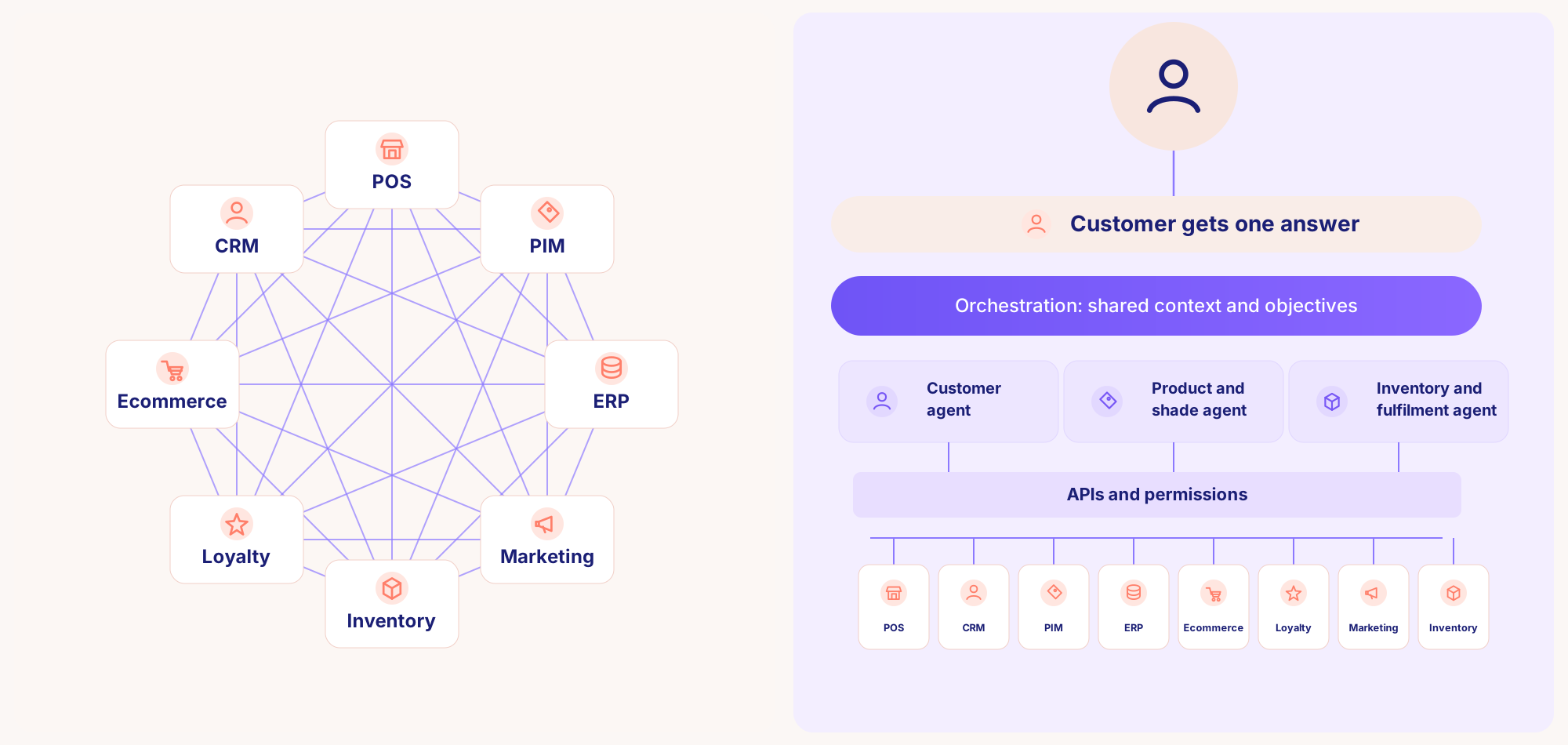
The first was technical. A large beauty retailer might run ERP, PIM, an ecommerce platform, POS, CRM, a CDP, loyalty, DAM, marketing automation, customer service tooling, inventory management and retail media. Each was built at a different time, for a different purpose, with its own data model.
The second was organisational. Each of those systems has an owner, and each owner has a budget, a roadmap and KPIs. Ecommerce optimises for conversion. Stores optimise for footfall and store P&L. CRM optimises for engagement. Merchandising optimises for sell-through.
The customer journey crosses all of those boundaries. The organisation doesn't. In my experience, the second integration was always harder than the first. It's not just my experience, either: in MuleSoft's most recent Connectivity Benchmark Report, 66% of IT leaders said their organisation still doesn't provide an integrated experience across channels.
Haven't we heard this before?
It's fair to be sceptical here. CDPs promised a single customer view. Integration platforms promised to connect everything. Composable commerce promised flexibility without replatforming. Each was sold, in its own way, as the layer that would finally tie the silos together.
Each helped. None closed the gap, because each still depended on the same underlying approach: define the workflows in advance, hard-code the rules between systems, and get the teams to agree on them first.
If this happens, then do that. Every cross-channel scenario had to be anticipated, specified, built, tested and maintained. With enough systems and enough scenarios, the number of possible paths grows faster than any organisation can build them.
Agents work differently. An agent doesn't need every path mapped in advance. Given a goal, it can reason about what information it needs, which systems hold it, what constraints apply and what should happen next, and it can work that out for each individual request.
Integration provides access. Agents provide coordination.
What that looks like in practice
Imagine a customer writes:
"I bought this foundation at your Oxford Street store last month. I love it, but I need something lighter for a holiday next week."
Today, answering that well means stitching together store purchase history, product knowledge, shade expertise, inventory and delivery timelines, which usually sit across four teams and at least five systems. In most organisations the realistic outcome is a generic product recommendation, or a customer service agent opening three screens and hoping.
In an agentic setup:
She gets one coherent answer. She never has to understand how the company is structured, and nobody had to phone another department.
Just as importantly, nobody had to replace the POS, the ERP, the CRM or the ecommerce platform. The existing systems stayed where they were. What changed is that something can now reason across them.
What agents don't solve
It would be easy to stop there and declare omnichannel solved. It isn't, and technically literate readers will know it.
Agents still need access to systems through APIs and permissions. They need reliable product, inventory and customer data, and they need identity resolution. The store purchase in my example only helps if you know she's the same person who opened the app, which, as we've established, many brands still don't. An agent working from bad data doesn't fix it. It spreads the errors faster and more confidently.
There's also a harder issue, and I think it's the one leaders should pay most attention to.
Silos were never only about data. They were about incentives. If ecommerce wants the online sale and the store team wants the visit, an inventory agent and a campaign agent don't make that tension go away. They reach it faster, in every single customer interaction, and something has to decide which objective wins.
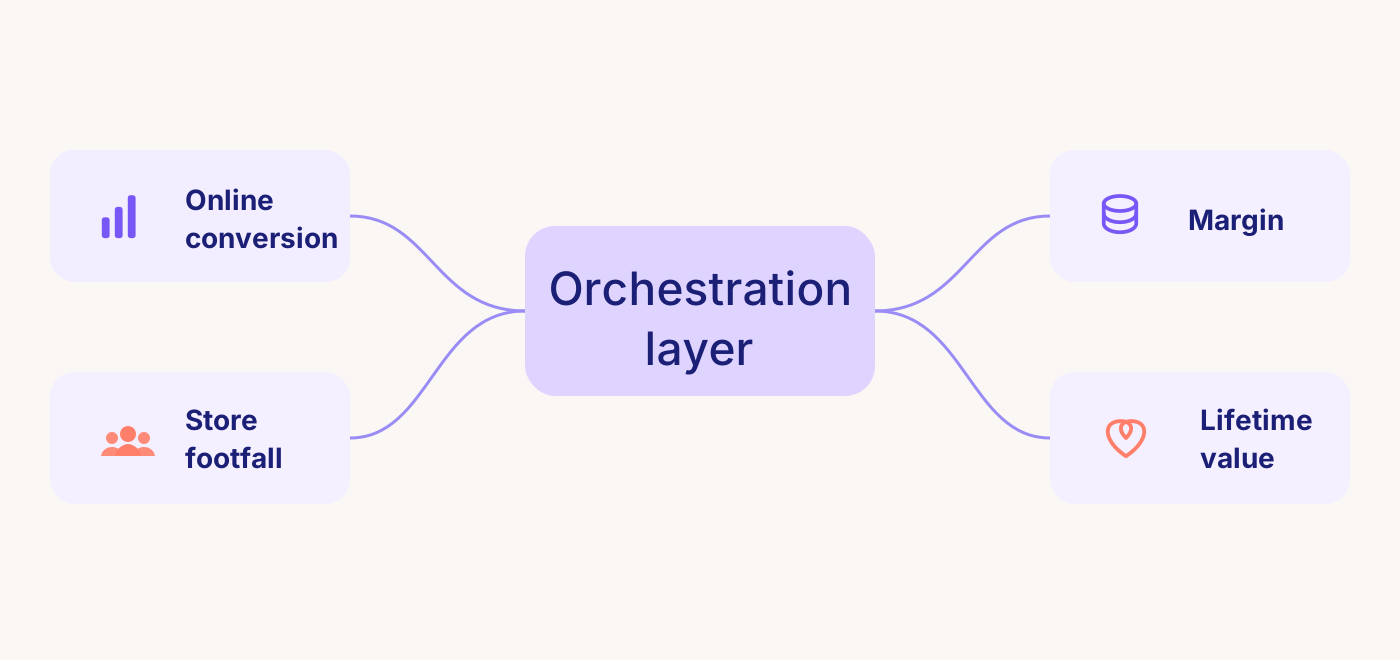
So agents don't remove the need for organisational alignment. They change where it has to happen. Instead of negotiating every cross-channel workflow team by team, leaders have to decide what the orchestration layer is optimising for: margin, lifetime value, channel P&L or customer outcome. They also have to decide who owns that decision.
That's a governance question, not a technology one. The brands that answer it deliberately will get far more from agents than the ones that let each department deploy its own.
Why this matters now
The coordination problem is getting harder, not easier.
Brands were already struggling to join up store, ecommerce, app and CRM. Now add conversational commerce, social commerce, retail media, camera-native experiences and, increasingly, consumers' own AI assistants shopping on their behalf.
That means more interfaces, more signals and more decisions per customer. Trying to handle all of that through another decade of point-to-point integration and cross-functional transformation programmes isn't realistic.
The shift I think we're entering is from omnichannel transformation to agentic orchestration. The goal stays the same; the mechanism for getting there changes.
Omnichannel asked organisations to behave as one. Agents may finally let their systems act as one, but only if leaders decide what "one" is supposed to be optimising for.
Christina Harutyunyan is Founder & CEO of ARview.