
Virtual try-on spent years being measured like a widget: engagement, conversion, maybe returns. That misses its most valuable output.
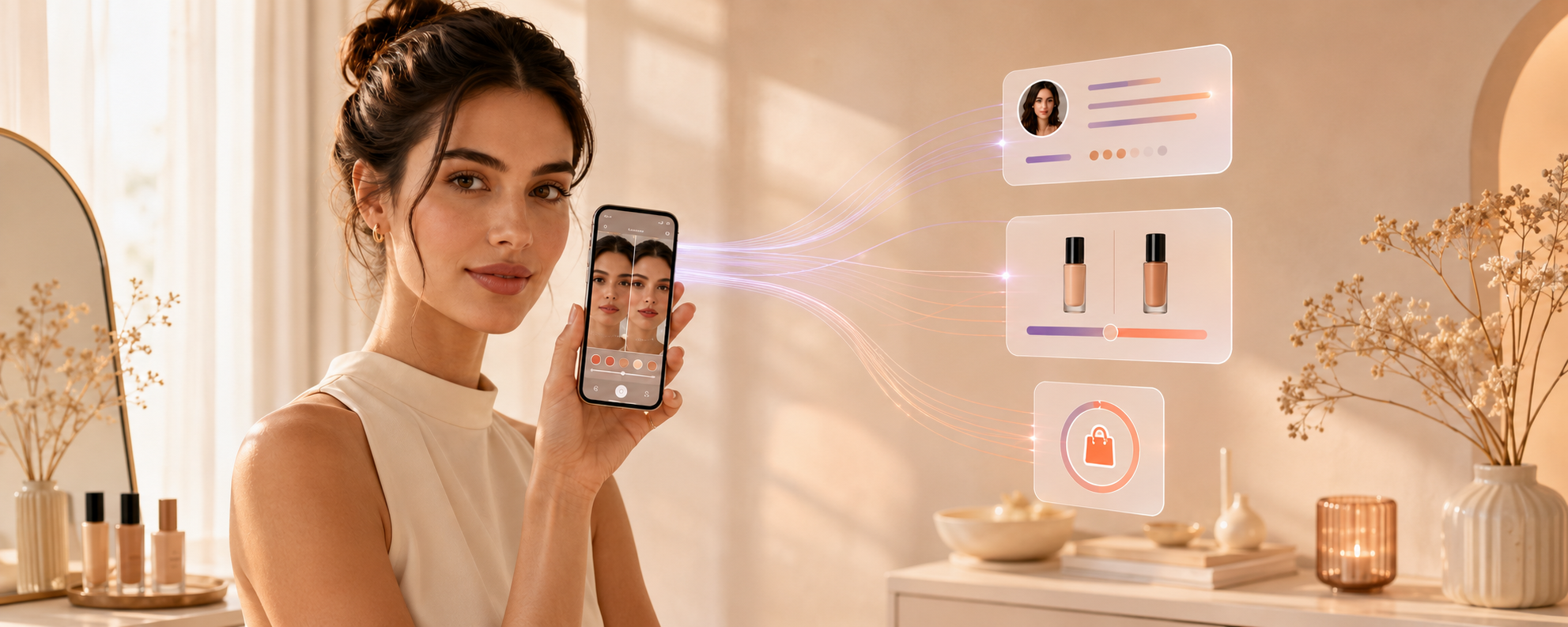
Virtual try-on has matured into one of the highest-leverage tools in beauty and jewelry e-commerce, but the brands treating it purely as a conversion feature are leaving much of the value on the table.
What the numbers actually show
Across published studies, virtual try-on consistently correlates with three commercial effects: higher conversion among shoppers who engage with it, longer session engagement and lower return rates, particularly in shade-sensitive categories like foundation and lip, where mismatch is a dominant return reason.
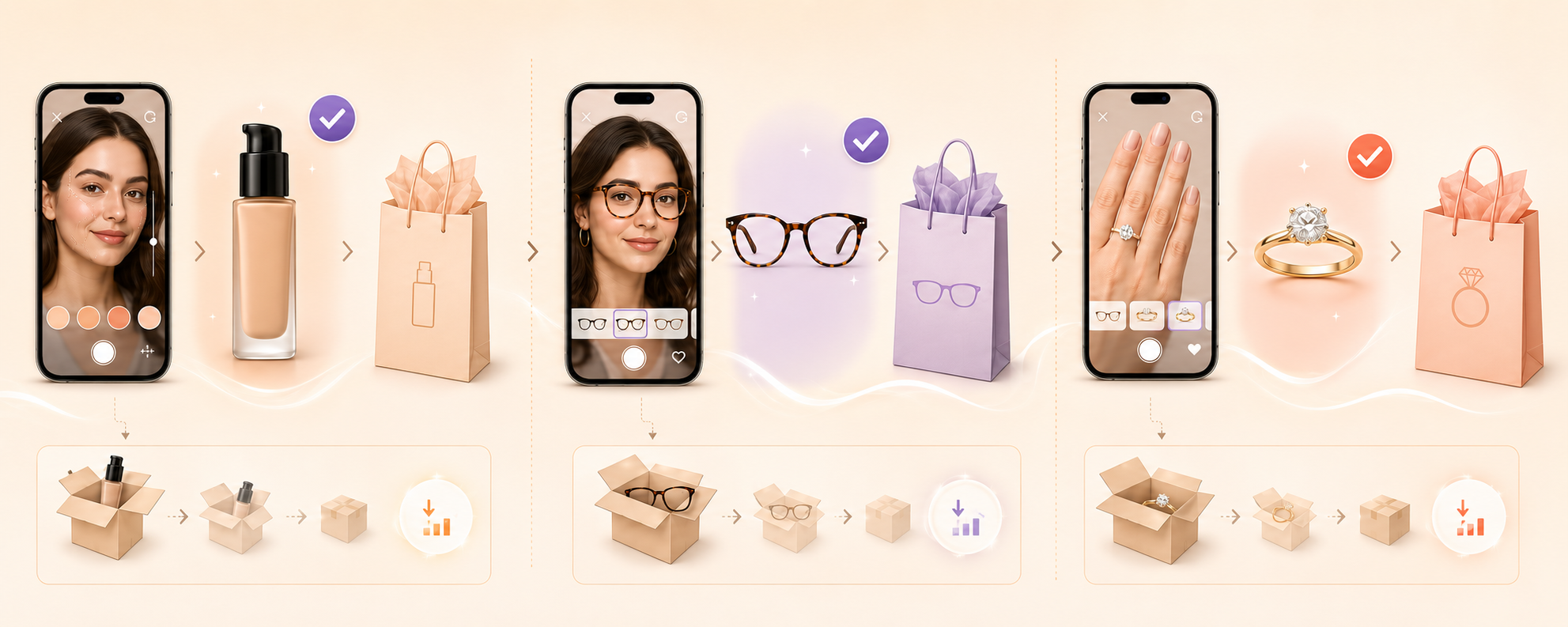
The conversion signal is large. Snap's consumer AR research found that shoppers who interact with an AR product experience convert at roughly 94% higher rates than those who don't (Snap / Deloitte Digital), and virtual try-on has been associated with a 2.4x increase in purchase likelihood (industry benchmarks). In eyewear, where appearance is close to the entire decision, McKinsey put the average conversion lift around 18%, and Warby Parker reported roughly 45% fewer returns within six months of launching try-on (Fittingbox, citing McKinsey and retailer data). On the returns side, shade mismatch is the leading cause of beauty returns, and published studies report virtual try-on cutting returns by 30% to 40% in the categories where fit is hardest to judge from a photo.
In jewelry and eyewear, try-on reduces the imagination gap that suppresses high-ticket online purchases: seeing a ring or a frame on yourself does the work a product photo never could.
The honest caveat: engaged users self-select. Shoppers who try on are already higher intent. The fair claim isn't that virtual try-on triples conversion. It's that virtual try-on helps convert high-intent shoppers who would otherwise stall at uncertainty, while reducing the costly downstream failure mode: the return.
The part most brands miss: the data exhaust
Here's the strategic shift.
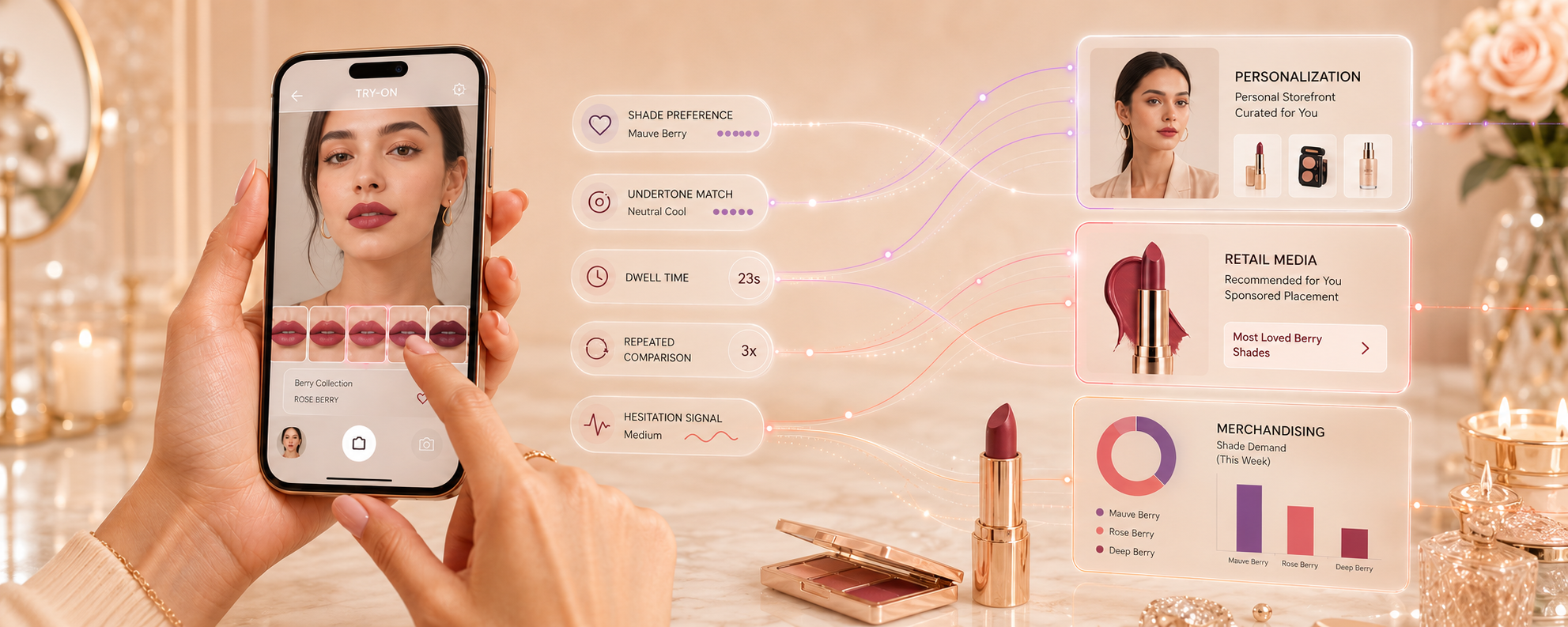
The conversion lift is the visible benefit. The more durable benefit is the intelligence generated by the interaction: shade preferences, undertone signals, face shape, skin condition signals, dwell time per product, hesitation patterns and comparison behavior.
This is first-party, high-intent, sensory-level data that no other channel produces, and most brands throw it away the moment the session ends.
Used properly, that data feeds three engines:
- Skin Intelligence: shade, undertone and skin-condition signals refine matching accuracy with every session.
- Personalization: preference and hesitation patterns shape what each shopper sees next, on-site and in remarketing.
- Retail Media: aggregated affinity signal informs which products, shades and campaigns get sponsored placement, and for whom.
This is precisely how ARview approaches it. Try-on, built on best-in-class AR and AI APIs, is the sensor layer. Our agents across Skin Intelligence, Personalization and Retail Media form the reasoning layer that turns each session into compounding commercial value.
The widget is the beginning of the system, not the end.
How to evaluate virtual try-on properly in 2026
If you're a CRO or e-commerce lead assessing virtual try-on, move past "does it look cool" to four questions:
- Can you get clear attribution of the conversion and return-rate deltas it actually drives?
- Is the session data captured as structured signals you own, or does it stay inside a vendor's black box?
- Is there a real path from signal to activation, personalization, merchandising, retail media, or does the data die at the session?
- Does it hold up in your highest-uncertainty categories: shade matching, jewelry, eyewear?
Virtual try-on stopped being a gimmick the moment it became an input rather than an output.
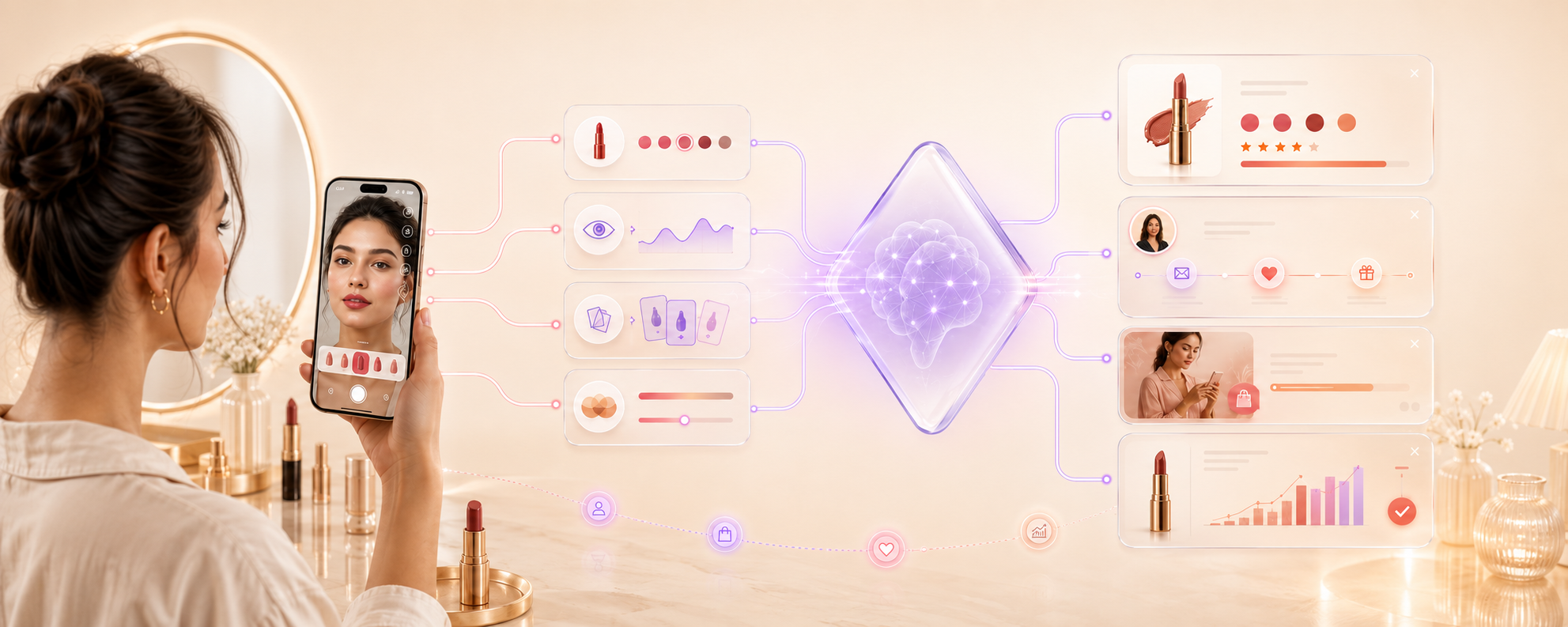
The brands extracting the most value from it aren't simply the ones with the prettiest mirror. They're the ones with a system behind the glass: one that learns from every interaction and turns that intelligence into the next recommendation, the next campaign, the next merchandising decision and ultimately the next sale.
ARview lets brands launch drag-and-drop virtual try-on experiences, then connect every interaction to personalization, retail media, merchandising and the rest of the business. Book a pilot scoping call.