
What is AI skin analysis for professional skincare brands?
An AI skin analysis platform for professional skincare brands gives every beautician a guided skin scan and matched product recommendations for each client, and gives headquarters consented, network-wide insight into what clients need. The brand finally sees its end clients, while the salon visit stays at the center.
Why do professional skincare brands lack data on their end clients?
Professional skincare brands are built on the trust their beauticians earn. The network recommends, applies and sells, and the brand supplies product, training and protocols. What the brand rarely has is a view of the client on the other side of that conversation.
It does not know which skin concerns walk through the door, what was recommended, whether the routine was followed or whether the client came back. Many of these brands sell little or nothing directly to consumers, so there is no storefront generating that evidence either.
The result is that product decisions, training priorities and the next launch lean on order volumes from the network instead of evidence about the people using the products.
What changes when every salon visit generates data?
The beautician runs a guided skin scan in the salon, and the client sees her results on the spot. Recommendations are matched to what the skin needs, by ingredient and not by bestseller lists, and turn into a routine the client can follow at home.
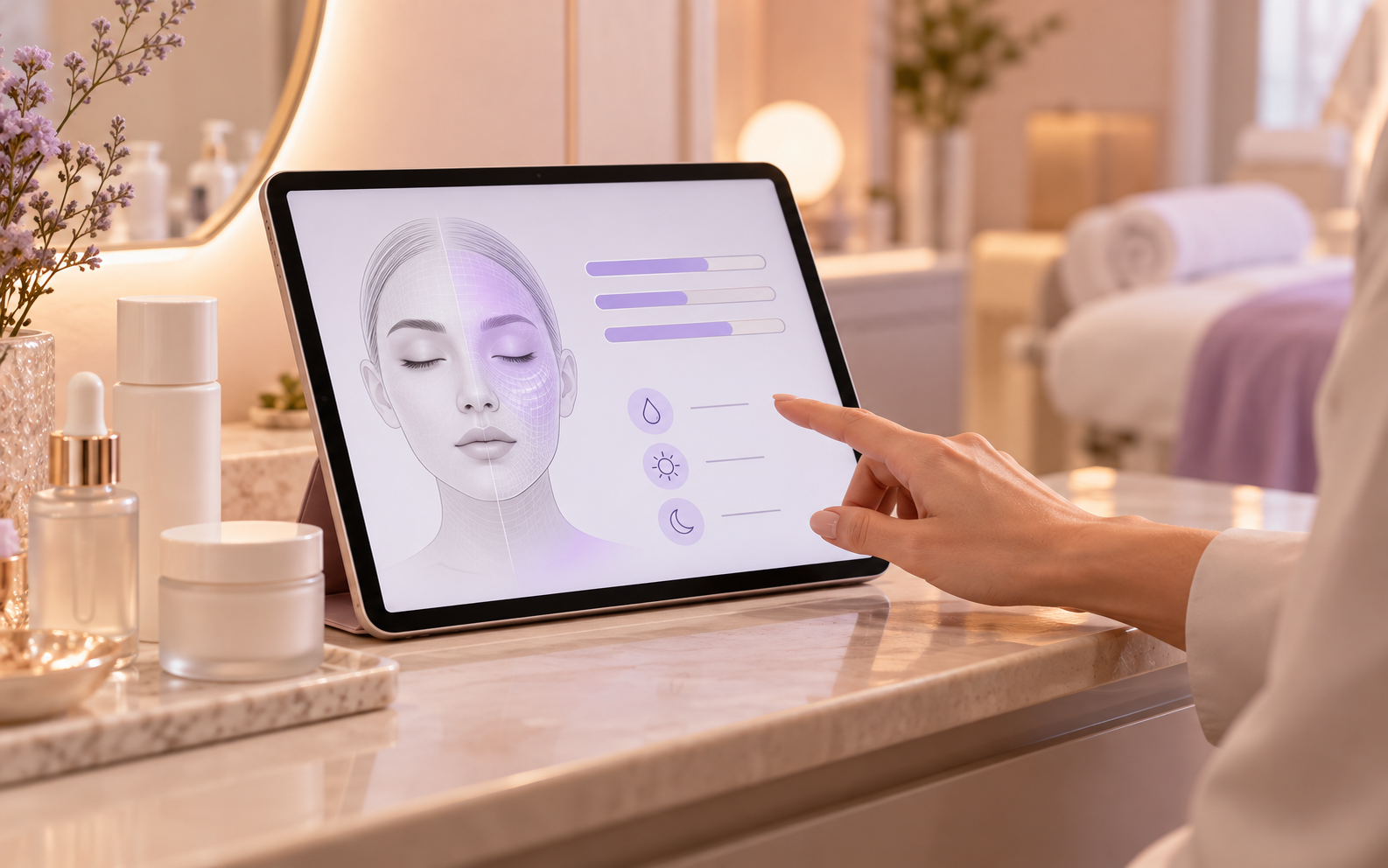
The beautician stays the expert. The scan gives her a shared, visual starting point for the conversation, and the brand's own products and protocols drive what is recommended.
Then the loop closes. A reminder brings the client back to the salon for a re-scan and refills, so repeat purchase runs through the beautician and not around her. Behind every visit, the brand now holds a record it never had: skin results, recommendations and return visits, across the whole network.
How does it work, from audit to HQ control?
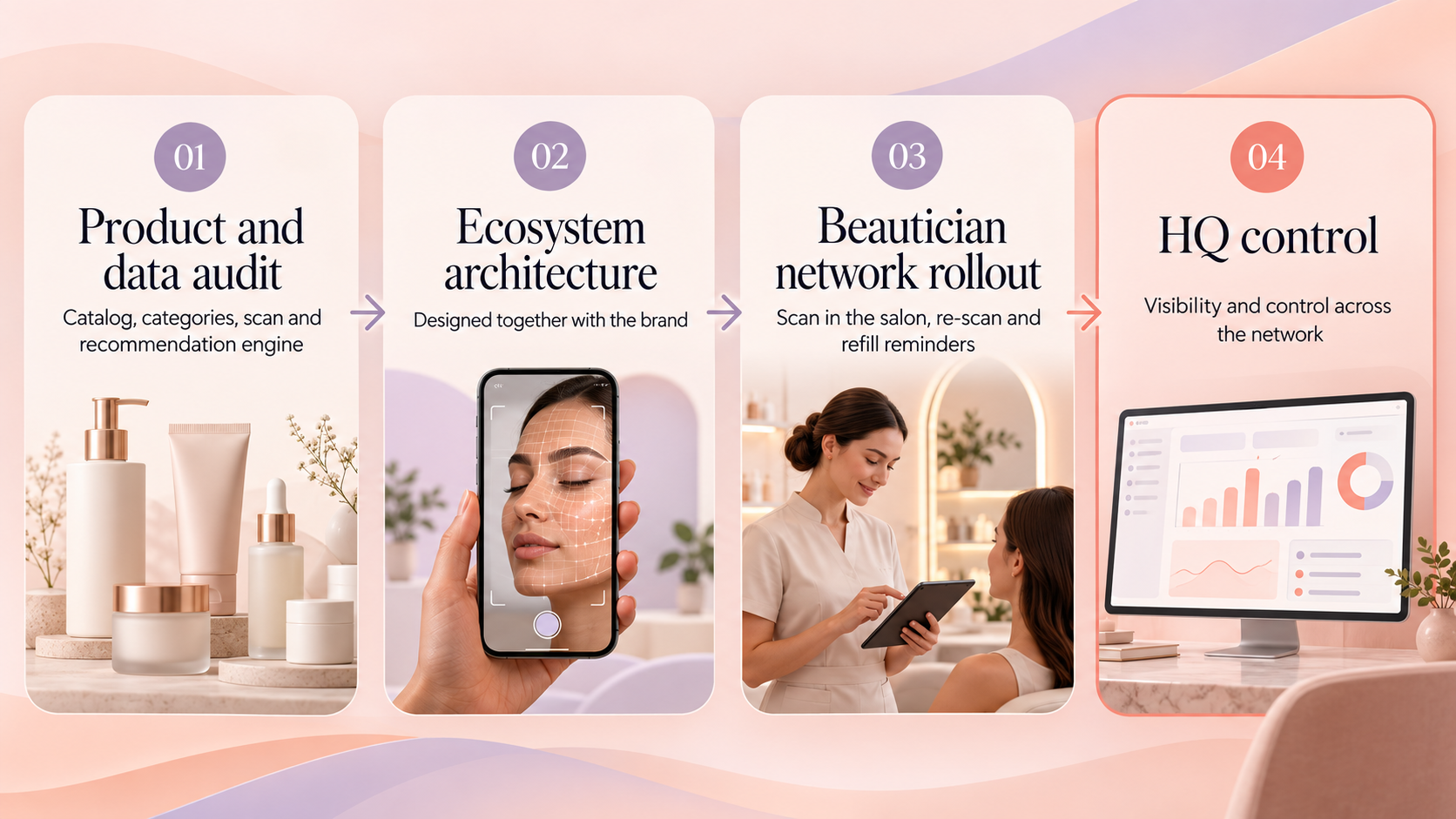
- Product and data audit. We set up the brand's catalog, product categories, and the scan and recommendation engine, so everything starts from the brand's own products.
- Ecosystem architecture. After the audit, we design the full ecosystem together with the brand: how the scan, the recommendations and the beautician workflow fit together.
- Beautician network rollout. The experience is deployed to the network, with the scan in the salon and re-scan and refill reminders bringing clients back.
- HQ control. Headquarters gets full visibility and control across the catalog, the recommendations and the network, in one place.
For brands that want it, a direct-to-consumer store can be added later on the same architecture. It is an option, not a requirement.
Why does a professional skincare platform need to be fully custom?
A professional skincare brand's value sits in its formulas, its protocols and the way its beauticians work. A generic tool flattens all three, so the platform is fully custom: it runs on the brand's own catalog and protocols, and carries the brand's own look and voice.
The brand chooses how it arrives. ARview can build an entirely new app for the brand, or integrate into the ecosystem the brand already runs. What headquarters sees, whether individual or aggregated, and who has access to it, is configured with each brand.
Underneath, Aria, a domain-specific AI model trained on each brand's own data, powers 8 specialist agents. For a salon-led brand the ones that matter most are skin diagnostics, routine building and personalization.
What should brands ask before choosing a platform?
- Whose products does it recommend? It should work from your catalog and protocols, not a generic product database.
- Where does the beautician sit in the flow? The scan should support her expertise and keep her at the center of the visit.
- What brings the client back? Look for re-scans and refill reminders that lead back to the salon.
- What does headquarters see and control? Ask for visibility across the network and control over the catalog and recommendations.
- How does it reach a large network? Ask how onboarding works across hundreds or thousands of salons.
- Build or integrate? Check whether it can arrive as a new app or fit into the ecosystem you already have.
- What happens to client images and data? Ask exactly what is stored, what is not, and who can see it.