
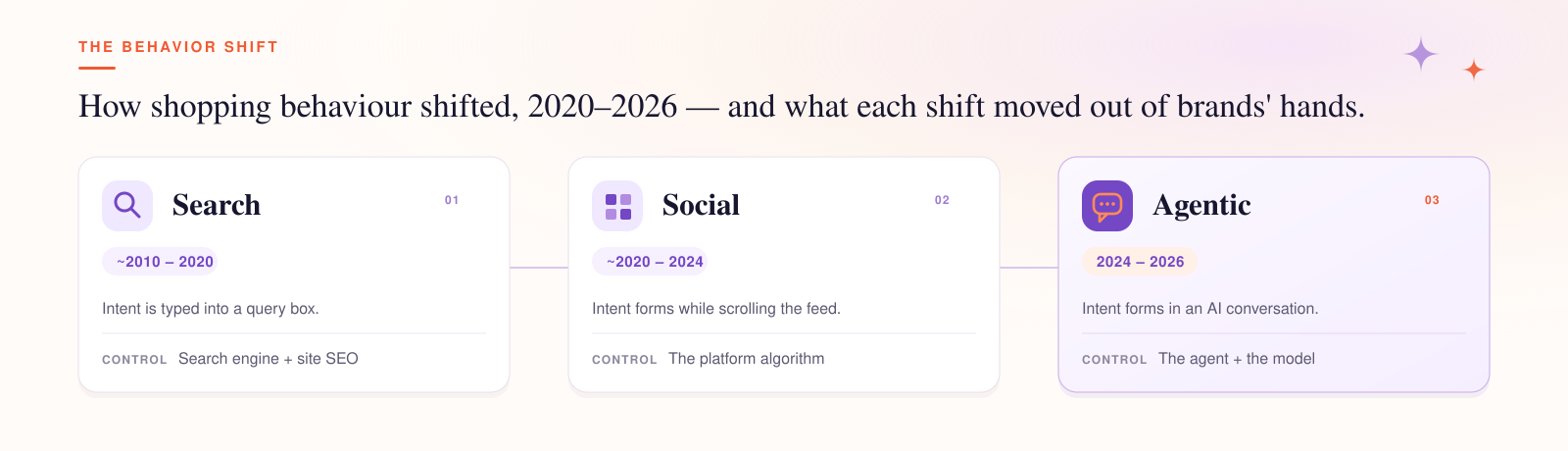
Product discovery is how a shopper gets from "I might want something" to "this is the one." For most of the internet's history that journey started in a search box. It doesn't any more. Between 2020 and 2026 discovery moved across three surfaces, the search bar, the social feed and now the AI agent, and each move pushed the moment of purchase intent further from the brand's own store while handing control to a new intermediary. The brands that keep getting stranded are the ones that optimized for the surface that just got demoted.
- Discovery has migrated across three eras: search (intent is typed), social (intent forms on the feed) and agentic (intent forms in a conversation with AI).
- What is product discovery, and why has it changed?
- Discovery is the part of shopping that happens before a decision. It's the difference between a shopper who arrives knowing the exact product she wants and one who arrives with a feeling, a budget or a problem and needs help getting to the shelf.
- The mechanics of that help have changed three times in six years. What changed each time wasn't the shopper's desire. It was the surface where the desire turned into intent, and whoever owned that surface got to shape the outcome. Follow that thread and the last six years tell a clear story.
What is product discovery, and why has it changed?
Discovery is the part of shopping that happens before a decision. It's the difference between a shopper who arrives knowing the exact product she wants and one who arrives with a feeling, a budget or a problem and needs help getting to the shelf.
The mechanics of that help have changed three times in six years. What changed each time wasn't the shopper's desire. It was the surface where the desire turned into intent, and whoever owned that surface got to shape the outcome. Follow that thread and the last six years tell a clear story.
The search era (roughly 2010–2020): discovery as a query
In the search era, discovery was something the shopper did to a database. You typed what you wanted, the engine returned ranked results and brands competed on SEO, product listing ads and tidy category taxonomies. Intent was explicit and typed. Control sat with the search engine and the retailer's own site structure.
It worked well, but only for shoppers who already had the words. If you couldn't name what you were looking for, the query box had nothing to offer you, which left a large group of would-be buyers browsing bestsellers and leaving. That gap never fully closed. It just got inherited by the next era.
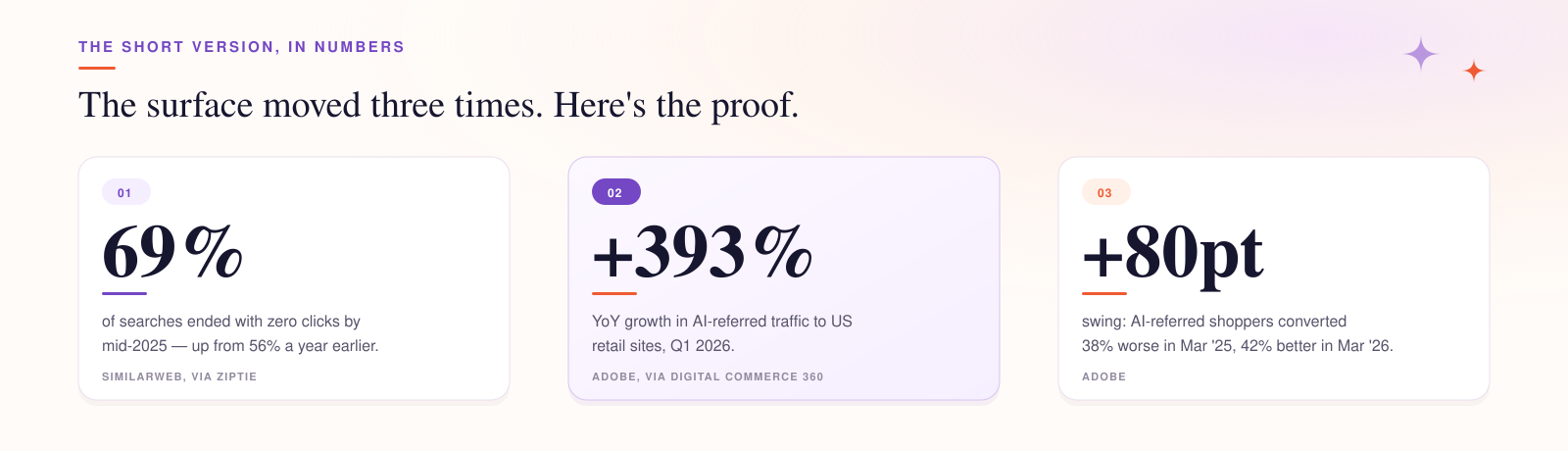
The search surface itself is now eroding even for the shoppers who do have the words. Zero-click searches, where someone searches and never clicks through to a site, rose from 56% to 69% between May 2024 and May 2025 as AI-generated answers took over the top of the page (Similarweb, via ZipTie). One study of 200,000+ keywords found click-through rate for the number-one organic result fell 32%, from 28% to 19% (GrowthSRC). Search still matters. It just returns less and less of the traffic it used to.
How did social feeds take over discovery? (roughly 2020–2024)
Somewhere around 2020 discovery stopped being something shoppers went looking for and became something that arrived. The feed did the work. A creator's routine, a get-ready-with-me video, a fifteen-second before-and-after, and intent formed before any search box was ever opened. More than half of shoppers now discover products through social platforms.
The control shift here was profound. In the search era a brand could earn its way to the top of a results page. On a feed, the platform's recommendation algorithm decides what surfaces and to whom, and the brand's owned store becomes the place a shopper arrives at last, if at all. The clearest proof is that the feed became a checkout: TikTok Shop is now among the UK's largest beauty retailers, selling roughly one beauty product every second.
Is TikTok really a search engine now?
For a large share of younger shoppers, yes. Google's own data has shown that close to 40% of Gen Z prefer Instagram or TikTok over Google when they're looking something up (reported by Nieman Lab), and an Adobe survey found 64% of US Gen Z had used TikTok as a search engine (Adobe, 2024). Beauty sits right at the center of it: skincare, make-up and hair are among the most-searched topics on the platform.
The nuance worth keeping is that this is a behavior, not a monolith. Some 2026 data suggests the raw preference for TikTok over Google has moderated as AI answers pull search back (ALM Corp). The direction still holds: a meaningful slice of shoppers now treats a social feed as the first place to look, and they expect to find, compare and buy without leaving it.
What is agentic commerce, and when did discovery become AI-mediated? (2024–2026)
Agentic commerce is shopping mediated by an AI that can discover, compare and increasingly transact on a person's behalf. Instead of typing a query or scrolling a feed, the shopper describes what they need to an assistant and the assistant does the looking. Intent now forms inside a conversation with a model.
This is the fastest of the three shifts. AI-driven traffic to US retail sites grew 393% year on year in the first quarter of 2026, after a 693% surge over the 2025 holiday season (Adobe, via Digital Commerce 360). ChatGPT referrals to US websites grew 367% across 2025. And the quality of that traffic flipped in a single year: in March 2025 AI-referred visitors converted 38% worse than other channels, but by March 2026 they converted 42% better, an 80-point swing that says these shoppers arrive further down the decision, not further up it (Adobe).
Control moves one more step here, past the platform to the agent and the model behind it. The shopper delegates the search. Whoever the agent trusts, and whatever it can actually read, decides what gets recommended.
Why do these shifts keep stranding brands?
The pattern repeats. Each era's winners optimized hard for a surface, and the next era demoted it. Brands that built their growth on search rankings watched social flatten the value of a number-one position. Brands that then went all-in on social are now meeting a shopper who never opens the feed because an agent is doing the looking. The attention keeps moving, and the tooling built for the last surface doesn't transfer to the next one.
The deeper issue is that each surface reads products differently. Search read keywords. Social read watch-time and creators. Agents read structured meaning, what a product is made of, who it suits and what problem it solves. A brand that is legible to one of these is not automatically legible to the next.
How should brands prepare for AI-mediated discovery?
Four moves separate the brands that stay found from the ones that don't.
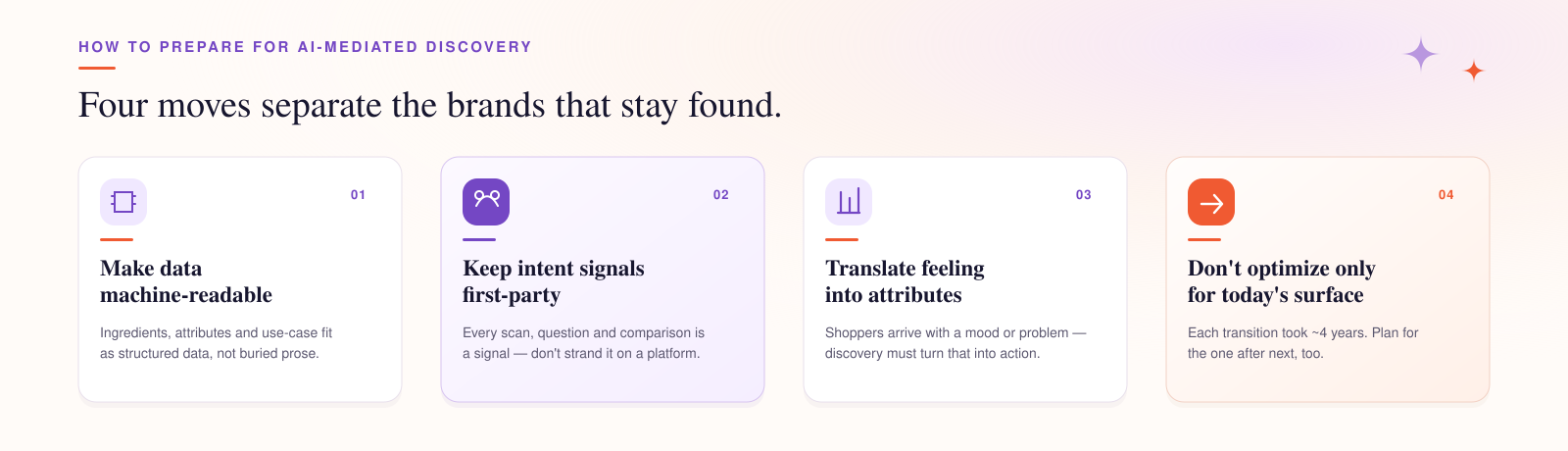
First, make product data machine-readable. An agent can't recommend what it can't parse, so ingredients, attributes, skin or use-case suitability and outcomes need to live as structured data, not as prose buried in a description.
Second, capture intent signals from discovery and keep them first-party. Every scan, question and comparison a shopper makes is a signal about what they actually want. When that signal is stranded inside a platform or a retailer, you're paying to educate a customer you don't get to keep.
Third, build discovery that translates feeling into attributes. Shoppers still arrive with a mood, a season or a problem rather than a product name. The job of a modern discovery layer is to turn that into something both a human and an agent can act on.
Fourth, stop optimizing only for the surface you can see today. The last three transitions each took roughly four years. Planning for only the current one is how brands get stranded.
This is the problem we built ARview to solve. It's camera-native discovery connected to real-time commercial intelligence, designed so that a shopper's interaction becomes a structured signal the brand can act on, whether a person or an agent is doing the shopping.
The shift at a glance
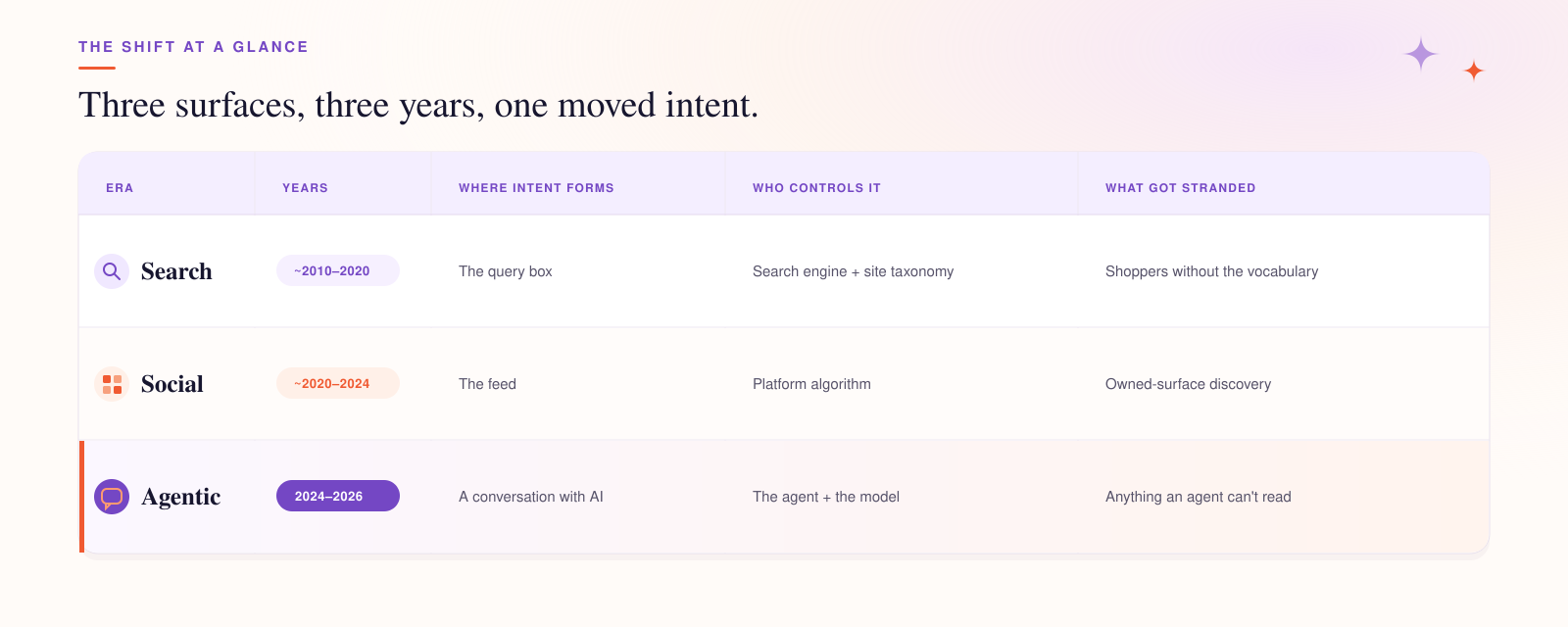
The surface changed three times in six years. The brands that stay found are the ones building discovery for how people, and now their agents, actually decide.